Introduction
If your air conditioner is struggling to keep your home cool during Spokane’s hot summers, it may be time to consider an upgrade. Many homeowners delay replacing their AC system, hoping repairs will keep it running longer. However, continuing to repair an outdated system can cost more in the long run than investing in a new, energy-efficient unit.
In this guide, we’ll walk you through everything you need to know about AC replacement in Spokane, including when to upgrade, warning signs to watch for, cost considerations, and how a new system can improve comfort and reduce energy bills.
How Long Does an AC System Last?
One of the most common questions homeowners ask is: “How long should my air conditioner last?”
On average, a central air conditioning system lasts:
- 10 to 15 years with proper maintenance
- Up to 20 years in ideal conditions
- Less than 10 years if poorly maintained
However, Spokane’s climate—with hot summers and cold winters—can put extra strain on HVAC systems. If your unit is approaching or exceeding 12–15 years, it’s wise to start planning for a replacement.
Signs You Need AC Replacement in Spokane
Not sure whether to repair or replace your system? Here are the key warning signs that indicate it’s time for a new AC system:
1. Frequent Repairs
If you’re calling an HVAC technician multiple times a year, those repair costs quickly add up. Investing in a new system can save money long-term.
2. Rising Energy Bills
Older systems lose efficiency over time. If your electricity bills are increasing without a change in usage, your AC may be the culprit.
3. Inconsistent Cooling
Hot and cold spots in your home often signal that your AC system is no longer performing effectively.
4. Strange Noises or Odors
Grinding, banging, or musty smells could indicate serious internal issues that are expensive to fix.
5. Uses Outdated Refrigerant (R-22)
Older units using R-22 refrigerant are expensive to maintain since it’s being phased out.
6. Poor Indoor Air Quality
An aging system may struggle to filter air properly, leading to dust, allergens, and humidity issues.
Repair vs Replacement: What’s the Better Choice?
A simple rule many HVAC professionals use is the “5,000 rule”:
Multiply the cost of repair by the age of your system.
If it exceeds $5,000, replacement is the better option.
For example:
- Repair cost = $600
- System age = 12 years
- Total = $7,200 → Replace
While repairs may seem cheaper upfront, replacing your AC often provides better value over time.
Benefits of Upgrading to a New AC System
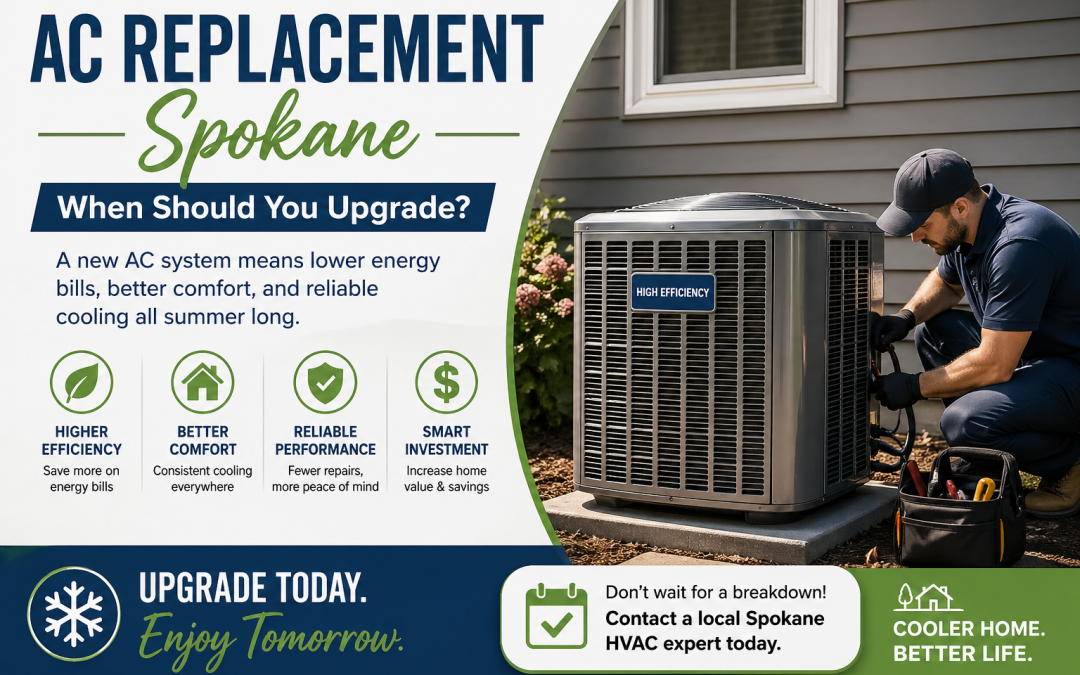
Upgrading your air conditioner offers more than just cooler air—it delivers long-term comfort, efficiency, and savings.
Improved Energy Efficiency
Modern systems have higher SEER (Seasonal Energy Efficiency Ratio) ratings, meaning they use less electricity to cool your home.
Lower Utility Bills
A new system can reduce energy costs by 20–40%, especially if replacing a unit older than 10 years.
Better Cooling Performance
Enjoy consistent temperatures throughout your home without hot spots.
Smart Technology Integration
Many new systems support smart thermostats, allowing remote control and automation.
Quieter Operation
New AC units operate much more quietly compared to older systems.
Increased Home Value
A modern HVAC system is a strong selling point for potential buyers.
AC Replacement Cost in Spokane
The cost of AC replacement varies depending on several factors:
Average Cost Range:
- $4,000 – $12,000+
Factors That Affect Cost:
- Size of your home
- Type of system (central AC, ductless mini-split, heat pump)
- Energy efficiency rating (SEER)
- Installation complexity
- Ductwork condition
While this may seem like a large investment, energy savings and reduced repair costs often offset the expense over time.
Choosing the Best Replacement AC System
Selecting the right AC system is crucial for performance and efficiency.
Central Air Conditioning
Best for whole-home cooling with existing ductwork.
Ductless Mini-Split Systems
Ideal for homes without ducts or for zoning specific areas.
Heat Pumps
Provide both heating and cooling—great for energy efficiency.
High-Efficiency Systems
Look for units with SEER ratings of 16 or higher for maximum savings.
Why Professional Installation Matters
Even the best AC system won’t perform well if it’s installed incorrectly. Hiring a professional HVAC contractor ensures:
- Proper system sizing
- Correct airflow and duct design
- Maximum energy efficiency
- Warranty protection
DIY installation or hiring unqualified technicians can lead to costly problems down the line.
When Is the Best Time to Replace Your AC?
Timing your AC replacement can save you money and stress.
Best Times:
- Spring and Fall (off-season discounts)
- Before peak summer demand
- When your system starts showing early warning signs
Avoid waiting until your AC completely fails during a heatwave—emergency replacements are often more expensive.
Energy Efficiency & Savings Tips
To get the most out of your new AC system:
- Install a programmable or smart thermostat
- Seal air leaks in your home
- Upgrade insulation
- Schedule annual maintenance
- Change air filters regularly
These steps can significantly extend your system’s lifespan and reduce energy costs.
AC Replacement Process: What to Expect
Here’s a quick overview of the replacement process:
- Home Evaluation – Technician assesses your needs
- System Selection – Choose the best unit for your home
- Old Unit Removal – Safe disposal of existing system
- Installation – New AC system installed professionally
- Testing & Optimization – Ensuring peak performance
Most installations are completed within one day, depending on complexity.
Common Mistakes to Avoid
When replacing your AC, avoid these costly errors:
- Choosing the wrong size unit
- Ignoring energy efficiency ratings
- Hiring unlicensed contractors
- Skipping maintenance after installation
- Focusing only on upfront cost instead of long-term savings
Why AC Replacement Is Worth It
Many homeowners hesitate due to the upfront cost, but upgrading your system offers:
- Long-term savings
- Improved comfort
- Better air quality
- Peace of mind
In most cases, a new AC system pays for itself over time through reduced energy bills and fewer repairs.
Conclusion
If your current system is outdated, inefficient, or constantly breaking down, investing in AC replacement in Spokane is a smart decision. A modern air conditioning system not only improves your home’s comfort but also saves money in the long run.
Don’t wait until your system completely fails—recognizing the early signs and upgrading at the right time can make all the difference.
FAQs
1. How long does an AC system last?
Most air conditioning systems last between 10–15 years, depending on maintenance and usage.
2. What are the signs you need AC replacement?
Frequent repairs, high energy bills, poor cooling, and strange noises are key indicators.
3. How much does a new AC system cost in Spokane?
The average cost ranges from $4,000 to $12,000+, depending on system type and installation.
4. Is upgrading to a new AC system worth it?
Yes, a new system improves efficiency, lowers energy bills, and enhances comfort.
5. What is the best AC replacement option?
The best option depends on your home, but high-efficiency central AC or heat pumps are popular choices.