
South Hill and Manito
Big two and three story homes where heat rises fast. Common issues are warm upper floors, attic air handlers and long refrigerant runs from a backyard condenser.
PNW
Spokane Heating & Air
We provide AC service in Spokane, WA for every kind of house the city has: hundred year old homes on the South Hill that got central air decades after they were built, and newer homes on the North Side and Five Mile Prairie that came with it. Repairs, tune-ups and emergency calls, with the price agreed before we start.
Cooling an older city
Walk through Manito, Logan, West Central or Hillyard and you'll see homes from the early 1900s. They were designed for wood, coal or oil heat and open windows in July. Air conditioning came later, sometimes much later, and it was fit in wherever there was room. That history shapes almost every AC service call we run inside the city.
An add-on system might have a condenser squeezed into a narrow side yard, refrigerant lines snaking up through a closet, and an indoor coil perched on a furnace in a low basement. Some houses still heat with radiators and cool with an air handler tucked into the attic. Each setup has its own weak spots, and knowing them saves time when your house is getting hot.
Ducts sized for gentle furnace heat often can't move enough cold air upstairs, so the second floor runs warm even when the equipment is healthy. Attic air handlers bake in summer and their drain pans clog. Old wiring and tired disconnects cause start-up trouble. We check these along with the usual parts, because fixing a capacitor won't help much if the real issue is airflow.
Five Mile Prairie, Northwest Spokane and the newer streets around Nevada-Lidgerwood mostly have central air built in from day one. Those systems tend to fail in more predictable ways: dirty outdoor coils, worn capacitors, clogged drains and slow refrigerant leaks. They are usually straightforward to fix, as long as someone actually tests before replacing parts.
Around the city
Same equipment, very different houses. Here is what we tend to run into from one part of town to the next.
Big two and three story homes where heat rises fast. Common issues are warm upper floors, attic air handlers and long refrigerant runs from a backyard condenser.
Grand old houses and converted apartments with tight lots. Ductless mini splits are common here, and service often means cleaning indoor heads and checking line sets.
Smaller older homes, many with central air added onto a basement furnace. We see undersized returns, clogged coils and outdoor units crowded by fences.
Newer homes with factory central air. Service is mostly tune-ups, electrical parts and coil cleaning, plus bonus rooms that run hotter than the rest.
A mix of newer builds and mid-century homes. Sunny hillside lots push afternoon heat well past what many systems expect.
Older central systems reaching the end of their run. We give honest repair prices and tell you when a part isn't worth putting into an aging unit.
Time to call
These are the problems Spokane homeowners mention most when they call us in July.
Lessons from 2021
In June 2021 the city hit 109°F. A normal July high here is around 85°F, and most systems are sized for that. Worn capacitors, dirty coils and low refrigerant turned small problems into no cooling at all. Add late summer smoke, when windows stay shut, and a spring service visit is the cheapest way to be ready.
Repair, maintenance, inspection
Repairs. We diagnose first, then quote. Capacitors, contactors, fan motors, drain clogs and refrigerant leaks are the usual suspects, and we work on most major brands.
Preventive maintenance. A yearly tune-up cleans the coil, tests the electrical parts and checks the charge, which keeps efficiency up and catches worn parts before July does. Ask about our maintenance plans.
System inspections. Buying an older home in Spokane? We can look over the cooling system and tell you its age, condition and what to budget for.
Emergency service. We take calls 24/7, and during heat waves we put homes with babies, older adults or medical needs first.
Our work
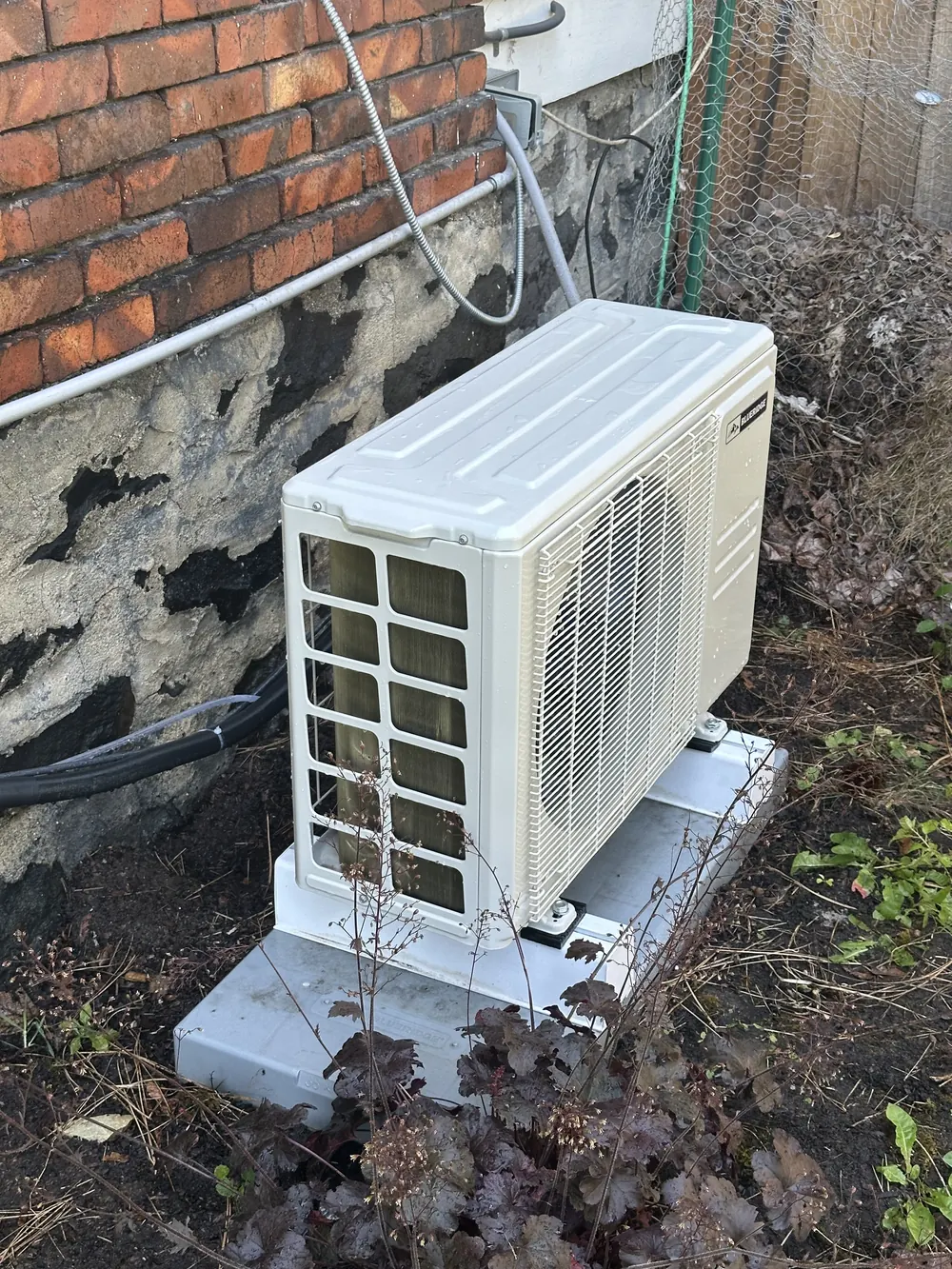
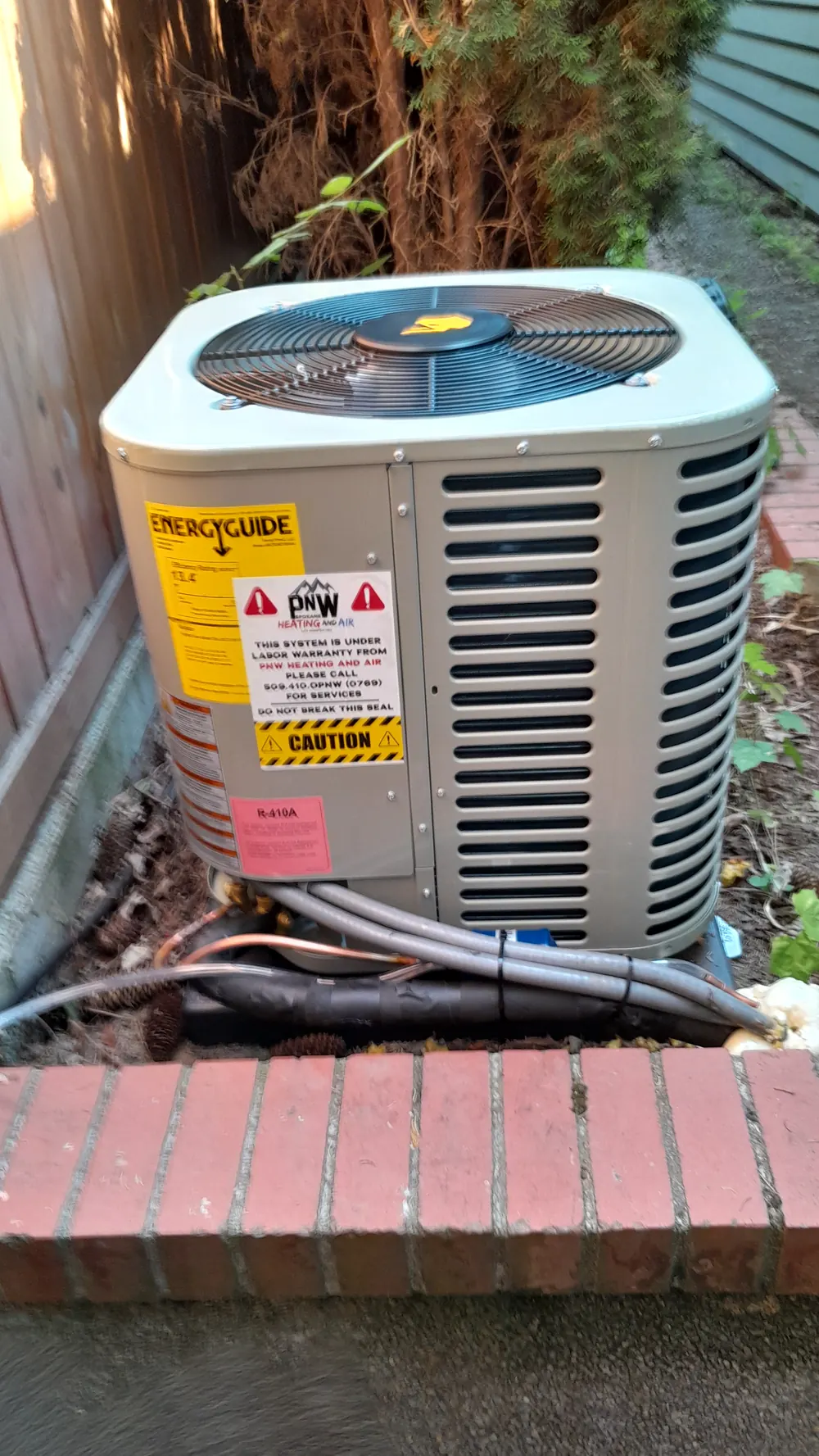
Photos from our own jobs, including an older brick home that went ductless.

Spokane AC FAQ

Something we didn't cover? Call (509) 410-0769 and ask.
Once a year, ideally in April or May before the first hot week. Spokane systems sit idle most of the year and then work hard for a short stretch, so a spring check catches the parts that weakened over winter.
Yes. We take emergency calls 24/7 anywhere in the city, from Hillyard to Latah Valley. During heat waves we prioritize households where heat is a health risk.
Most visits take one to two hours. Older homes with attic air handlers or long line runs can take a bit longer, and if a part has to be ordered we tell you the plan before we leave.
Yes. PNW Spokane Heating & Air is licensed in Washington under license # PNWSPSH772R2 and fully insured.
Usually, yes. A clean coil and healthy electrical parts mean shorter run times and lower bills, and replacing a weak capacitor in spring costs far less than an emergency call during a heat wave.
In older South Hill and Manito homes, the ducts were often sized for heat, not cooling, and upper floors get few supply runs. Heat also rises and the attic bakes. We check airflow first. Sometimes balancing helps, and sometimes a ductless mini split upstairs is the real answer.
Yes. Many Spokane homes heat with a boiler and cool with a separate attic air handler or ductless units. We service both, and we can look at the boiler while we're there.
Keep exploring
AC service in every Spokane neighborhood, from our shop on North Market Street in Mead.

Book service
Tell us your neighborhood and what the air conditioner is doing. We'll set up a visit, and if the house is getting dangerously hot right now, call and talk to a real person.