
In-floor radiant installs
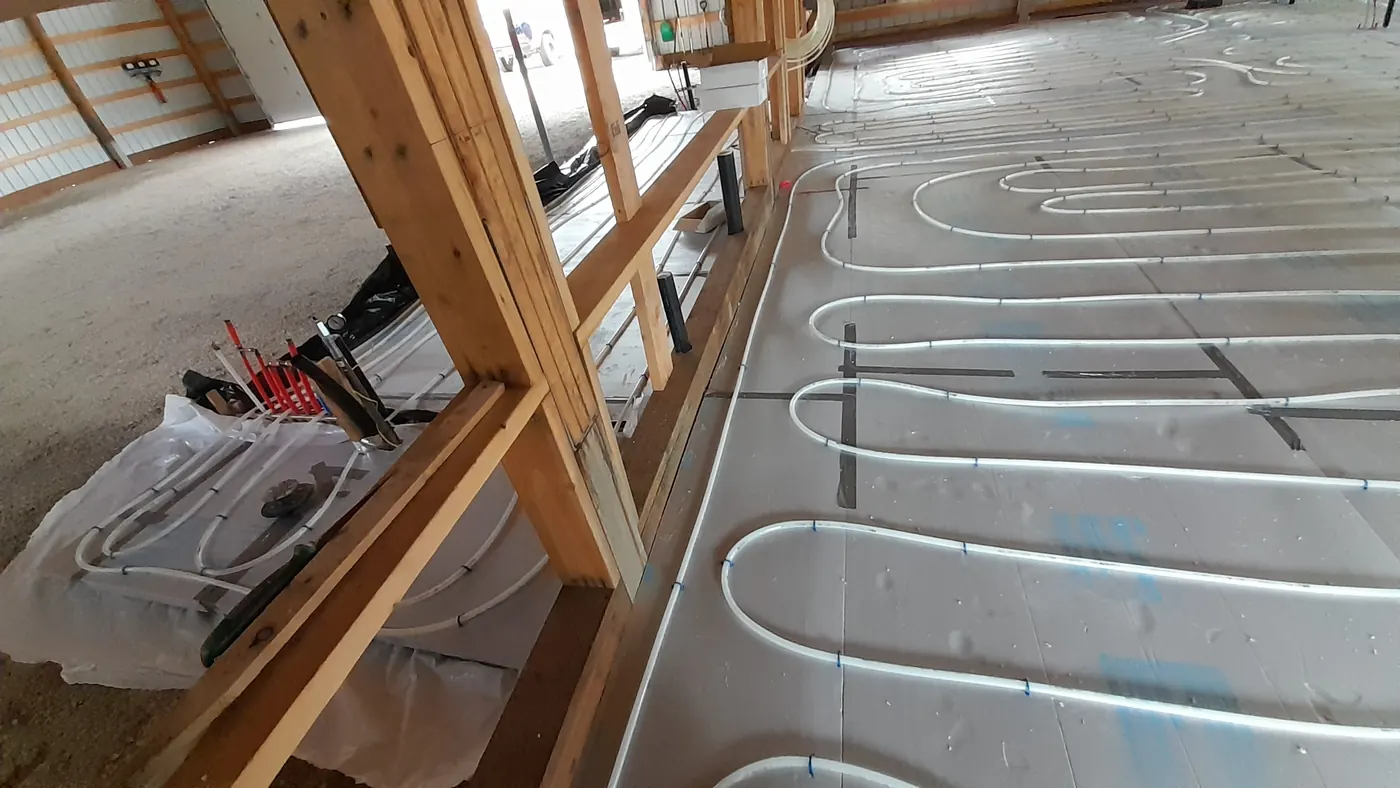
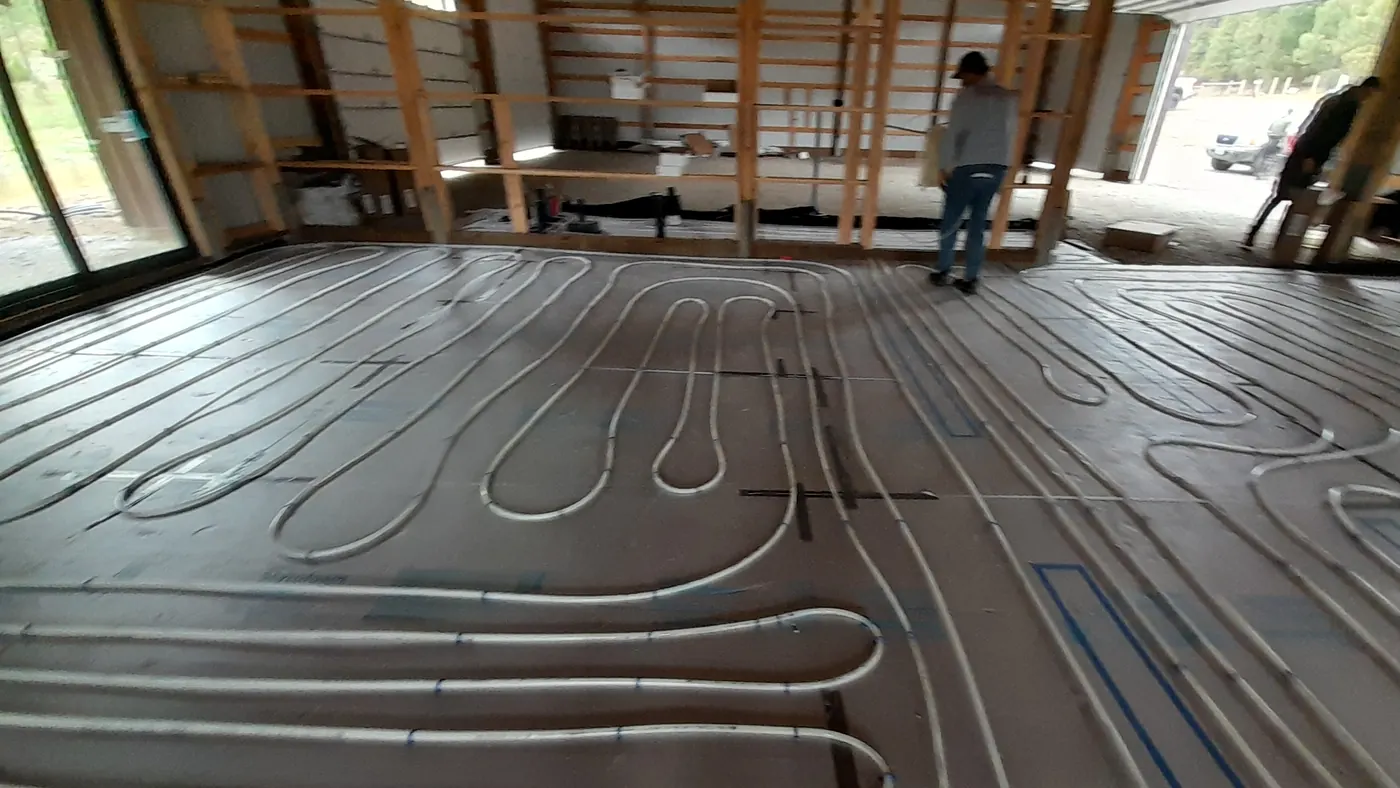
We lay out the tubing loops, fasten them to the insulation or wire mesh, pressure test them and tie everything back to a manifold, ready for the pour.
PNW
Spokane Heating & Air
Warm floors, quiet rooms and a shop you can actually work in all winter. We design, install and service in-floor radiant systems and the boilers that run them, from basements to big pole barns.
How it works
Hydronic radiant heat is simple once you picture it. A boiler warms water. A small pump pushes that water through loops of PEX tubing buried in your concrete slab or fastened under your floor. The floor soaks up the heat and gives it off gently to everything in the room, including your feet.
There's no furnace blowing air, so there's no draft, no dust getting stirred around and almost no noise. Because the whole floor is warm, most people find they're comfortable with the thermostat set a little lower than they'd need with forced air. The tradeoff is that a slab takes time to warm up and cool down, so radiant works best when you set a steady temperature and leave it.
Radiant is at its best in big, open spaces with concrete floors. A shop or pole barn out in Deer Park, Colbert or Green Bluff can be a hard place to heat with blowing air, because the warm air rises to the rafters and every time the overhead door opens it's gone. With a heated slab, the floor stays warm and the space recovers quickly after the door shuts. Garages, basements, and main floors in new custom homes are other great fits.
Plenty of older Spokane homes still run on a boiler with cast iron radiators, and many work fine for decades. Boilers often last 20 years or more. We repair and service existing boilers, and when one does need replacing, we install modern wall-hung units that take up a fraction of the space.
What we do
From the first loop layout to the yearly check, one crew handles the whole system.
We lay out the tubing loops, fasten them to the insulation or wire mesh, pressure test them and tie everything back to a manifold, ready for the pour.
Gas and propane boilers sized to your heat load, with the piping, pumps, expansion tank and controls to go with them.
No heat, cold zones, a pressure relief valve dripping, pumps that won't run or error codes on the display. We track down the cause and quote the fix first.
Separate loops and thermostats let you keep the shop at 55°F while the office next to it sits at 68°F, or heat the basement without cooking the bedrooms.
In some homes one appliance can heat both the floors and your domestic hot water. We'll tell you if that setup makes sense for your space and usage.
Yearly checks of the burner, venting, water pressure, pumps and safety controls so the system keeps running quietly for years. Maintenance
Before the concrete
Most of the work happens before the concrete truck shows up. Getting the timing right with your builder or concrete contractor is the most important part of the job.
Bring us in while you're still drawing the building. We work out the heat load, where zones and the manifold go, and where the boiler will live.
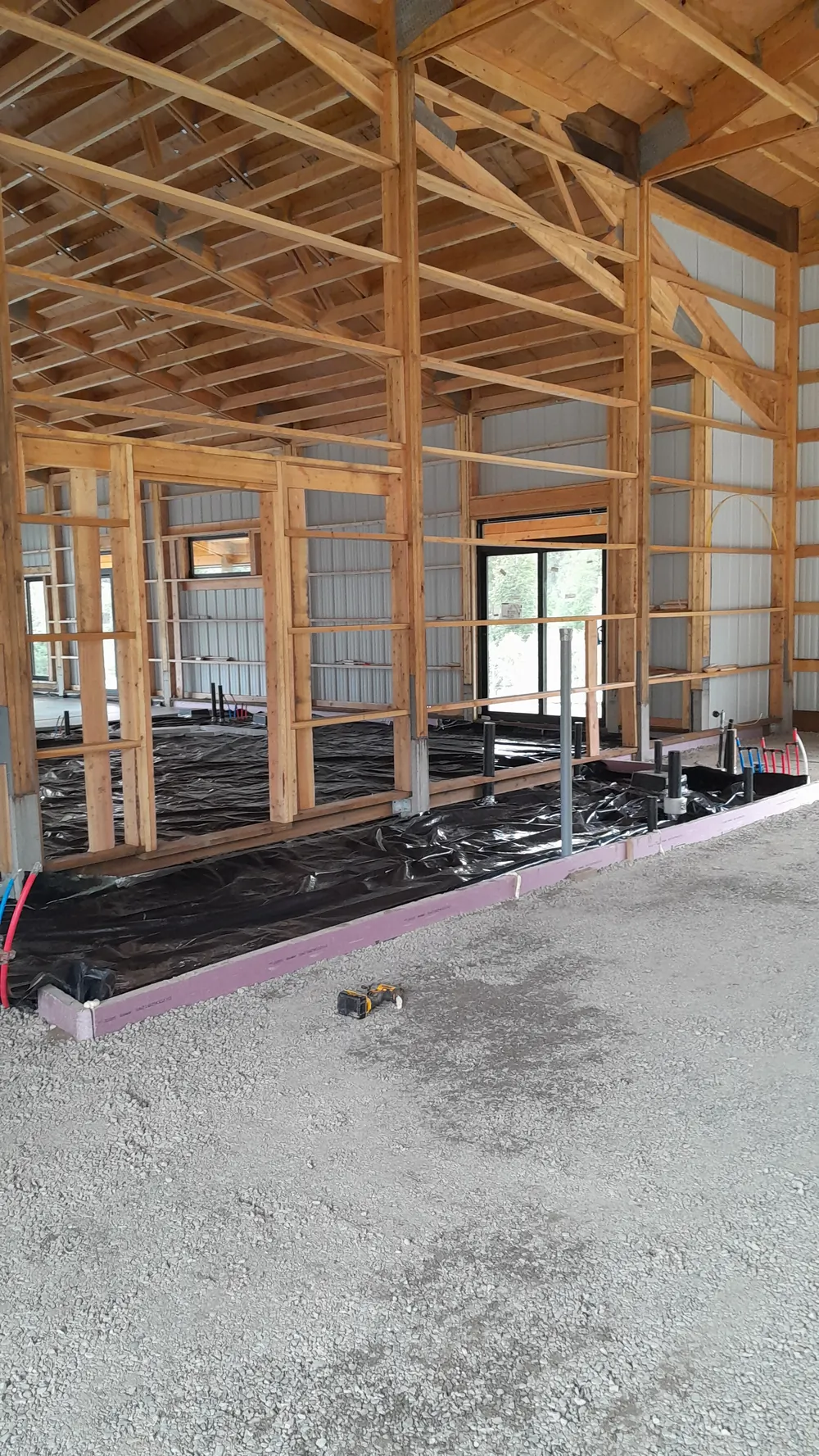
Your contractor preps the base, and rigid insulation goes down under the slab so the heat goes up into the floor instead of into the ground.
We lay out and fasten the tubing, then fill the loops with air under pressure and leave them that way through the pour, so any damage shows up right away.
The concrete goes in. Once the building is closed up, we set the boiler, pipe the manifold and bring the slab up to temperature slowly.
Is it worth it?
An in-floor system usually costs more to put in than a furnace, mostly because of the tubing, insulation and boiler. What you get back is a building that feels warmer at a lower thermostat setting, no ductwork to leak, and a boiler that can outlast a furnace by years. For a shop you use all winter, it can make the difference between a building you avoid and one you actually use.
Keeping it running
The tubing in your slab has no moving parts and should outlast the building. The boiler, pumps and valves are a different story. A yearly service keeps the burner clean, the water chemistry right and the pressure where it should be. It also catches a weak circulator pump before it quits on a January weekend.
If a zone stops heating, the cause is usually air in the loop, a stuck zone valve or a failed pump, not the tubing itself. Those are all fixable without touching the concrete.
Our work
Shops, manifolds and boiler rooms from around Spokane County.

Radiant heat FAQ

Working on plans? Call (509) 410-0769 and we'll talk through your building.
Not inside the existing slab. Tubing has to go in before the concrete is poured. For an existing floor, options include a thin overpour on top of the slab or tubing installed under a wood subfloor from below. For a garage or shop that's already built, a mini split or unit heater may be the simpler answer. Ductless mini splits
As early as you can, ideally while you're still pricing the building. We need to coordinate with your concrete contractor on insulation, tubing and the pour date. A few weeks of notice before the pour is much better than a few days.
It's usually efficient to run. Because the heat comes from the floor, most people are comfortable at a lower thermostat setting, and there are no ducts losing heat along the way. The real cost depends on your fuel, insulation and how warm you keep the space.
PEX tubing buried in a slab is expected to last for decades. The parts that wear are the boiler, pumps and valves, and those are all accessible for service or replacement.
Not in a practical way for our summers. Most radiant homes in Spokane add ductless mini splits or a small ducted system for air conditioning, which also helps with dehumidifying. Cooling options
Yes. We service and repair older gas boilers, pumps, zone valves and controls. If your boiler is near the end of its life, we'll give you honest numbers on repair versus replacement.
Not every room, but every zone. A zone is a group of loops controlled together. Many homes use a handful of zones, and a shop may just have one or two. We'll recommend a layout that balances comfort and cost. Thermostats
Related services
Radiant heat and boiler service across Spokane County, from our shop in Mead.

Book service
Tell us about the building, the slab or the boiler you have now. If you have a pour date coming up, include it so we can plan around your contractor.